Spiritual warfare is not an abstract idea. It is a lived reality for every Christian who seeks to follow Christ seriously. As many believers discover, this battle is filled with ambushes, inner resistance, and moments of deep insecurity. One of the most common weapons used against the soul is fear.
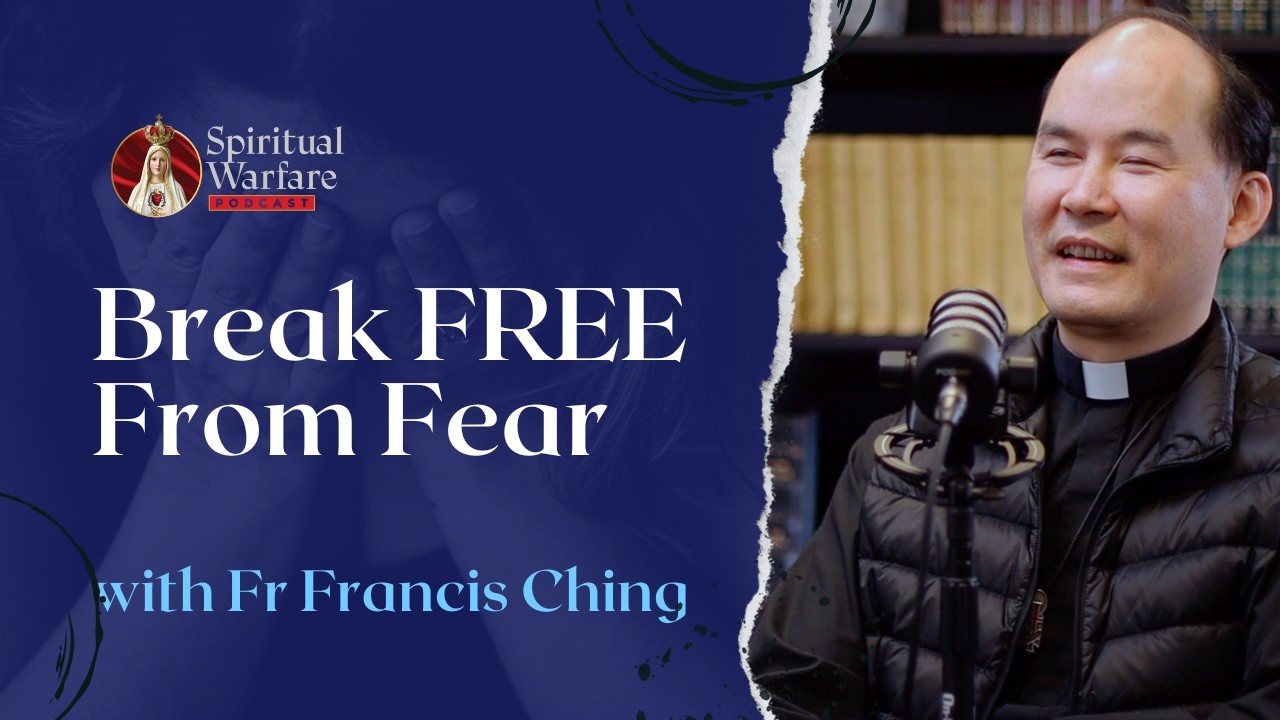
In this conversation, Fr. Francis Ching, a missionary priest of the Companions of the Cross, highlights a foundational truth for anyone engaged in Catholic spiritual warfare: fear is not from God.
Spiritual Warfare Requires Discernment
Spiritual warfare is dangerous precisely because it is subtle. It requires constant discernment of thoughts, emotions, and inner movements. Not every inner voice comes from God, and not every feeling should be trusted.
Fear often disguises itself as prudence, humility, or realism. Yet when fear dominates, it paralyses trust and undermines surrender. Fear must always be examined, not obeyed.
Surrender Begins with Identity
One of the deepest obstacles to surrendering to God is a distorted sense of identity.
Many Christians struggle because they believe, consciously or unconsciously, that they are not worthy of God’s love. This insecurity often manifests in thoughts such as:
- God cannot forgive me.
- I always fail.
- I am not good enough to surrender everything.
The truth of the Gospel contradicts these lies. Our identity is not rooted in our performance but in the love of a Father who created us and redeemed us in Christ.
The foundation of surrender is knowing who God is and who we are in Him.
The Voice of Fear vs. the Voice of God
Fear speaks with accusation, division, and despair. It echoes the ancient lie of the enemy, the same voice that seeks to divide humanity from God.
God’s voice, by contrast, reveals truth, calls to trust, and restores peace. Even when God invites us to conversion or sacrifice, His voice does not instil fear.
Fear may be permitted by God, but it is never sent by Him. It is a symptom, a warning light that points to something deeper in need of healing.
Healing, Trauma, and the Path to Freedom
Many people struggle to trust God because of past wounds, betrayals, or trauma. Human experiences of broken trust are often projected onto God Himself.
Healing can take different forms, such as:
- Prayer and meditation on the Gospel
- Confession and spiritual direction
- Intercessory prayer and accompaniment
- Healing ministry and inner healing
For some, healing comes quickly through truth and prayer. For others, it requires time, patience, and deeper accompaniment. What matters is knowing that a path of healing exists within the Church.
Fear as a Spiritual Diagnostic
Fear is not the enemy itself. It can function as a diagnostic tool.
Just as physical pain signals an underlying injury, fear reveals unresolved wounds, lies, or areas of control that resist surrender. When fear appears, the question is not only “How do I get rid of it?” but also:
What is this fear revealing that God wants to heal?
Perfect Love Casts Out Fear
Sacred Scripture teaches that perfect love drives out fear. When fear is allowed to remain unchecked, it also drives out love.
Two roots of fear frequently emerge:
- Lies about identity: forgetting that we are loved children of God
- Pride and control: wanting to remain the master of our own lives
True surrender requires dying to these inner objections and choosing trust over control.
Why Surrender Often Feels Difficult
Surrender does not always feel peaceful at first. It can feel like loss because it challenges our illusions of control. Yet difficulty is not a sign of failure.
Struggle itself is often evidence that real surrender is happening. The spiritual life unfolds over time, and growth is recognised more clearly when we look back and see fidelity, perseverance, and trust despite weakness.
Discipline Over Feelings
Surrender is lived through discipline, not emotions.
Prayer may feel dry. God may seem absent. Yet giving time to God, even without consolation, is a real gift. The value of prayer lies not in productivity, but in presence.
Restlessness and the Search for God
The human heart remains restless until it rests in God. Modern life, digital overload, and isolation have weakened our ability to reflect, listen, and encounter both God and one another.
Without reflection, we lose awareness of God’s presence. Without relationship and accompaniment, surrender becomes abstract and fear grows unchecked.
A Practical Spiritual Weapon: Start the Day the Night Before
One striking spiritual insight is this: the spiritual battle begins in the evening, not the morning.
Rest, order, and discipline prepare the soul for prayer and surrender. Going to bed at a reasonable hour is not trivial. It is often the first concrete act of surrender.
Refusing rest is often the first refusal to die to self.
Conclusion: Freedom Is Found in Trust
Fear is not from God. It reveals areas that need healing, truth, and surrender. God is not against us. He is for us.
Spiritual warfare is not won through control, but through trust. Not through perfection, but through perseverance. Not through fear, but through love.
True freedom begins when we surrender our fears to the One who is greater than them all.